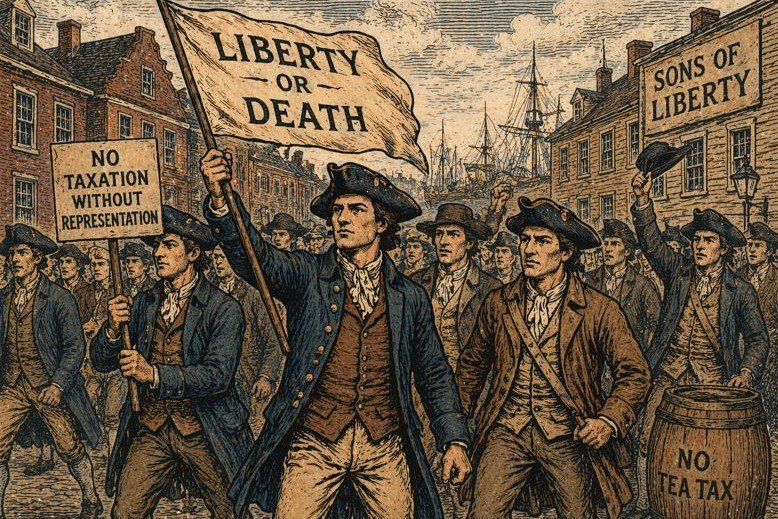
The series of confrontations known as the ropewalk fights played a critical role in the chain of events that culminated in the Boston Massacre. Whilst the massacre itself is often presented as a sudden event triggered by a tense standoff on the evening of March 5th, 1770, the reality is that the city of Boston was already primed for violence (One of the reasons that Boston became the "heart" of the American Revolution). The ropewalk fights, which occurred in the days immediately preceding the massacre, helped to normalize physical confrontations between Boston civilians and British soldiers, lowering the threshold at which such disputes escalated into physical violence.
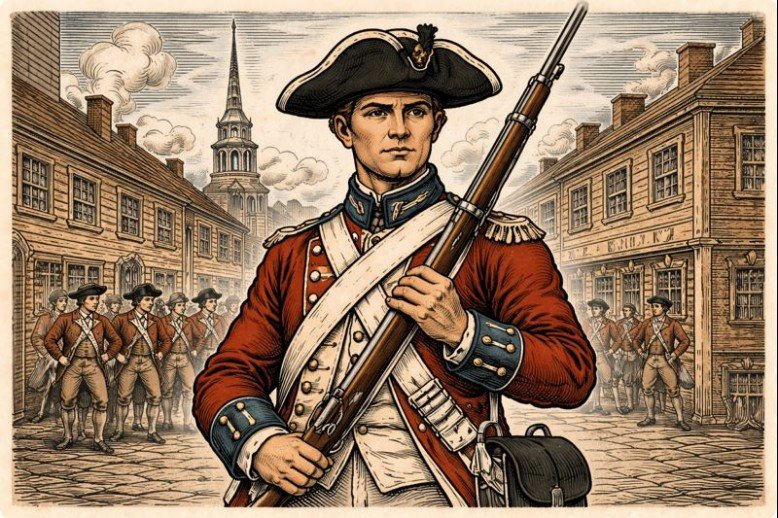
Boston in the late 1760s was a city under strain. The presence of British troops, sent to enforce unpopular taxation measures and maintain order, had introduced a constant source of friction into daily life. These soldiers didn’t lead an isolated life, separate from the colonists, rather they lived among them and frequently sought off-duty employment to supplement their income. This brought them into direct competition with local laborers, particularly those employed in industries such as rope-making, which was vital to Boston’s maritime economy. Ropewalks, long spaces used to twist fibers into rope, employed groups of skilled workers who were protective of their trade and wary of outside competition.
The ropewalk fights are generally understood to have begun with a seemingly minor encounter. A British soldier approached a ropewalk (a piece of land where rope could be laid out) seeking work and was rebuffed, reportedly with insults that questioned both his competence and his status. What might have remained a verbal exchange quickly escalated into a physical altercation, with the soldier being beaten by workers. This incident set off a cycle of retaliation, with the soldier returning with reinforcements, whilst the ropeworkers gathered allies of their own. Over the next several days, these groups clashed repeatedly in and around the ropewalk district.
These were not isolated or contained incidents, as the fighting spilled into nearby streets, drawing in additional civilians and soldiers. Participants used fists, clubs, and improvised weapons, with the confrontations becoming increasingly aggressive in nature. Importantly, these encounters were both public and visible, contributing to a broader picture in which violence became an accepted means of resolving disputes. It led to many civilians growing more confident in challenging soldiers (and the establishment), whilst soldiers became more defensive and more likely to respond with unnecessary and excessive force when confronted/challenged.
The ropewalk fights also intensified existing grievances. For Boston’s citizens, the soldiers were not only symbols of British authority but also economic rivals who threatened their livelihoods. For the soldiers, the hostility of the local population created a sense of unease, provocation and danger etc. Each clash reinforced negative perceptions on both sides, making subsequent encounters more volatile. By early March 1770, the relationship between soldiers and civilians had deteriorated to the point where even minor provocations could trigger significant acts of violence.
When the confrontation that led to the Boston Massacre began, it followed a pattern already established during the ropewalk fights. A group of civilians taunted a British sentry, drawing a crowd and escalating tensions. As in the earlier clashes, insults gave way to thrown objects, including snowballs and debris. The presence of a crowd, the heightened psychological/emotional state of those involved, and the recent history of violence all contributed to a rapid escalation. In this mix, the decision of British soldiers to fire into the crowd was not an isolated reaction but part of a broader context in which restraint had already been eroded.
In this sense, the Ropewalk fights can be understood as a crucial precursor to the Boston Massacre. They demonstrate how repeated low-level encounters can condition individuals and groups to respond more aggressively, making a deadly outcome increasingly likely. Rather than viewing the Boston Massacre as a singular and isolated act, it is more accurately seen as the culmination of a series of confrontations in which the ropewalk fights played a central and formative role.