The Battle of Lexington, fought on April 19th, 1775, marked the beginning of open armed conflict between Great Britain and its thirteen American colonies. Although relatively small in scale, the encounter carried enormous symbolic and strategic significance, setting in motion a war that would ultimately lead to American independence.
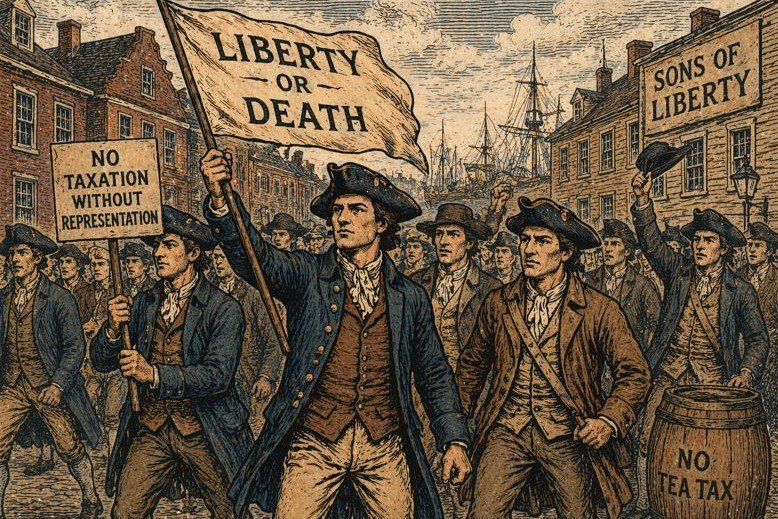
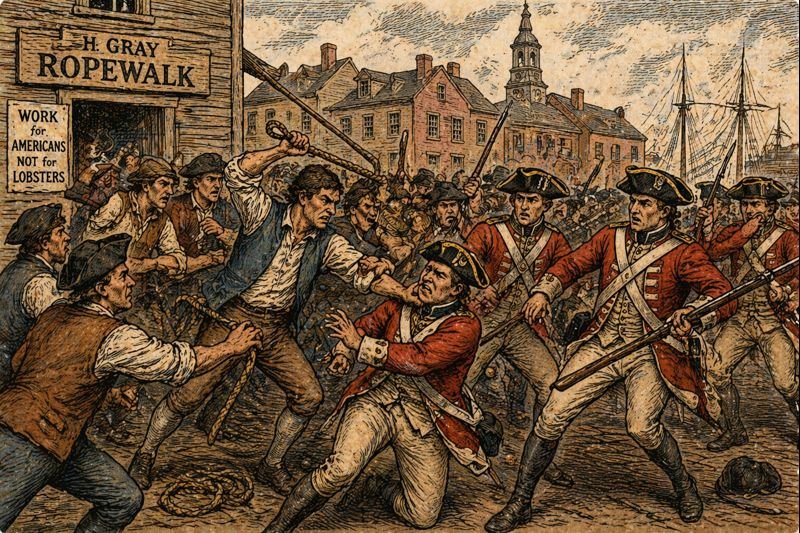
The origins of the conflict at Lexington can be traced to the escalating tensions that followed events such as the Boston Massacre and the punitive measures imposed by Britain in the form of the Coercive Acts. By 1775, Massachusetts had become the center of colonial resistance, with local militias, known as minutemen, organizing and preparing for the possibility of armed confrontation. At the same time, British authorities were determined to reassert control and prevent the colonies from openly rebelling.
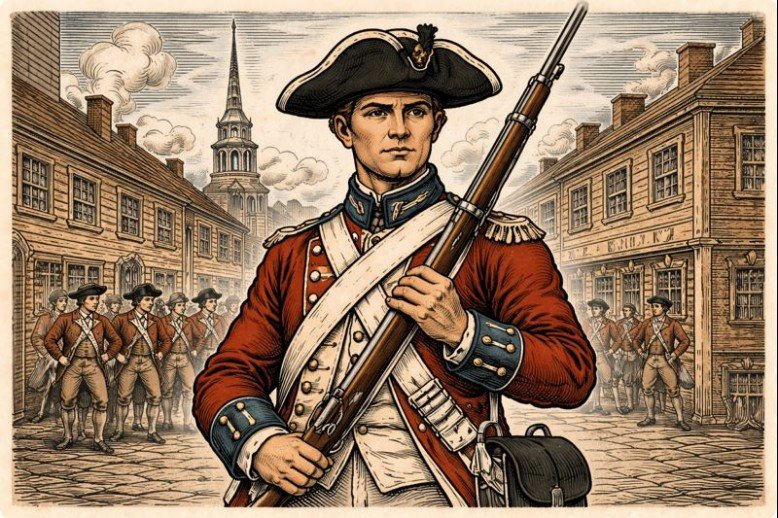
The immediate cause of the march to Lexington was British intelligence indicating that colonial militias were stockpiling weapons and ammunition in nearby Concord. General Thomas Gage, the military governor of Massachusetts, ordered approximately 700 British regulars to march from Boston to Concord to seize these supplies and, if possible, arrest key patriot leaders such as John Hancock and Samuel Adams. The mission was intended to be swift and discreet, but secrecy proved impossible.
Colonial networks of communication ensured that news of the British movement spread rapidly. Riders such as Paul Revere and William Dawes famously warned the countryside that British troops were advancing. As a result, local militias were alerted and began to assemble along the route. By the time British forces reached the town of Lexington in the early morning hours, they encountered a small group of colonial militia drawn up on the town green.
The militia at Lexington, numbering around 70 men, was commanded by Captain John Parker, a veteran of earlier conflicts. His instructions were cautious; the militia was not to provoke a fight but to stand its ground if necessary. Facing them were several hundred British soldiers under Major John Pitcairn. The British ordered the militia to disperse, and for a brief moment, it appeared that the confrontation might end without violence.
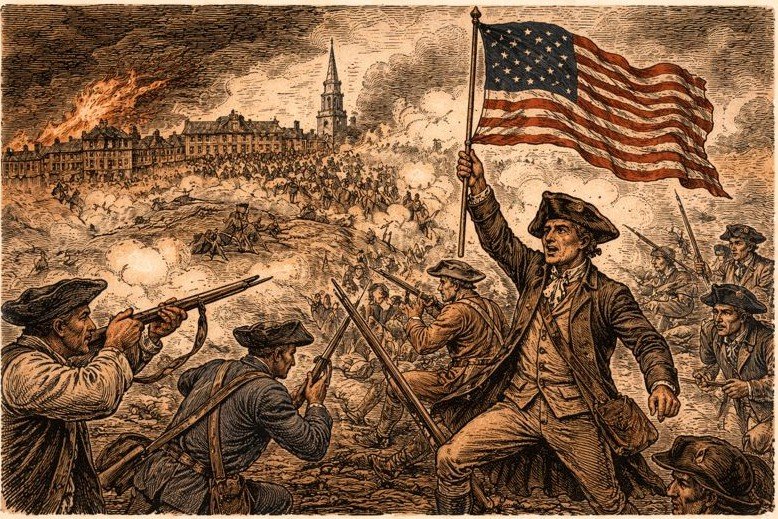
Then, a shot was fired, what would later be called the “shot heard ’round the world.” To this day, it remains unclear who fired first. Some accounts s uggest a colonist discharged a weapon, whilst others imply that a British soldier acted prematurely. What is certain is that the initial shot triggered a volley from the British troops. The militia, outnumbered and outmatched, scattered under the fire. Eight colonists were killed, and several others were wounded, whilst British forces suffered minimal casualties.
In purely military terms, the engagement at Lexington was a brief and one-sided encounter. The British troops continued on to Concord, where they faced more organized resistance. However, the significance of Lexington lay not in its tactical outcome but in its symbolic impact. For the first time, colonial militias and British regular soldiers had exchanged gunfire, crossing a threshold that could not easily be reversed.
The events at Lexington quickly spread throughout the colonies, carried by word of mouth, letters, and printed accounts. Much like the Boston Massacre before it, the incident was interpreted and reframed in ways that emphasized British aggression and colonial victimhood. The deaths of the militiamen were seen as evidence that Britain was willing to use force against its own subjects, reinforcing the argument that colonial rights could not be secured without resistance.
The battle also demonstrated the effectiveness of colonial organization and communication. The rapid mobilization of militia forces along the route to Concord showed that resistance was no longer isolated or spontaneous but coordinated and widespread. This would become even more apparent later that day, as British troops, retreating from Concord to Boston, were subjected to sustained attacks by militia forces using guerrilla-style tactics.
From a broader perspective, Lexington marked the transition from political dispute to armed conflict. Prior to April 1775, many colonists still hoped for reconciliation with Britain. Even those who opposed British policies often framed their arguments in terms of rights within the empire rather than independence from it. The exchange of fire at Lexington made such a position increasingly untenable. Once blood had been shed, the possibility of returning to the status quo diminished rapidly.
In the months that followed, the conflict escalated. Colonial forces laid siege to Boston, and the Continental Congress took steps to organize a unified military response, eventually appointing George Washington as commander-in-chief. What had begun as a confrontation over taxation, representation, and governance had now become a full-scale war.
The Battle of Lexington, though brief and limited in scope, thus occupies a central place in American history. It represents the moment when words gave way to weapons, when tension turned into violence, and when the path toward independence became not just imaginable, but unavoidable.