The Sons of Liberty emerged in the mid-1760s as a loosely organized but highly influential network of colonial activists who opposed British taxation and authority in North America. Their origins are typically traced to the widespread resistance against the Stamp Act, which imposed direct taxes on printed materials in the colonies. What began as protests against a specific piece of legislation quickly evolved into a broader movement challenging the legitimacy of British rule, particularly the principle of taxation without representation.
The group was not a formal organization with membership rolls, but rather a coalition of merchants, artisans, laborers, and political leaders who shared a common cause. In Boston, one of the most active centers of resistance, prominent figures such as Samuel Adams, John Hancock, and Paul Revere were closely associated with its activities. These individuals, along with many lesser-known participants, used a combination of public demonstrations, propaganda, intimidation, and sometimes violence to resist British policies. Their methods ranged from organizing boycotts of British goods to staging protests and targeting tax collectors and loyalist officials.
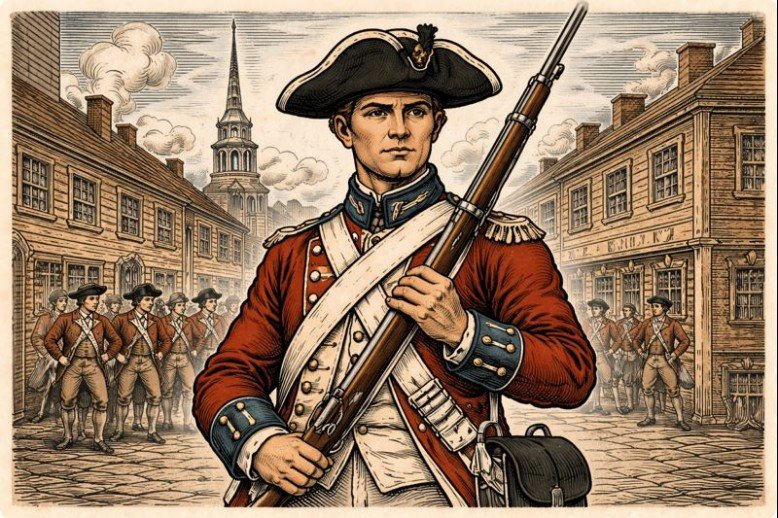
Boston in the late 1760s was a city under increasing strain. The arrival of British troops in 1768, intended to enforce customs regulations and maintain order, only heightened tensions. For many colonists, the presence of a standing army in peacetime was seen as an occupying force rather than a protective one. The Sons of Liberty played a central role in shaping public opinion against the troops, portraying them as instruments of oppression. Through pamphlets, speeches, and orchestrated public gatherings, they cultivated an atmosphere of resistance that permeated everyday life.
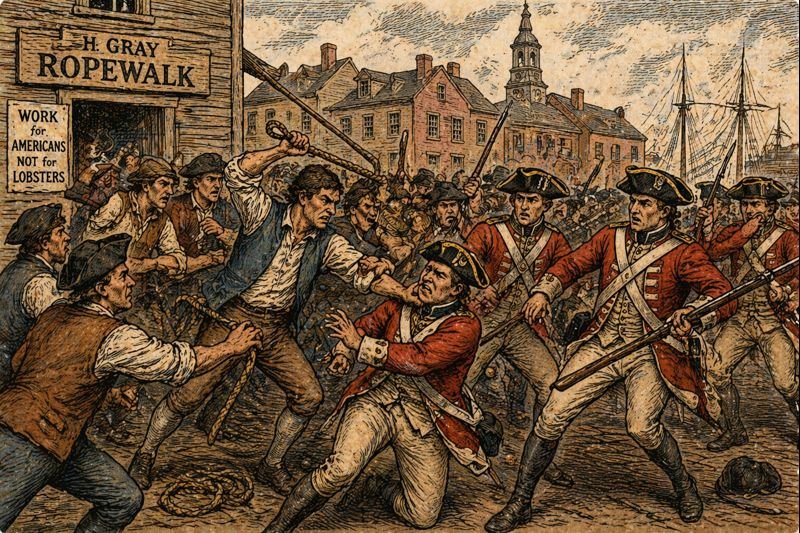
The relationship between civilians and soldiers deteriorated steadily, with frequent confrontations in the streets of Boston. Incidents such as the ropewalk fights of 1770, violent clashes between British Soldiers and local workers, illustrate how volatile the situation had become. Members and supporters of the Sons of Liberty were often involved in these confrontations, whether directly or indirectly, as they encouraged resistance to British authority and fostered a culture in which defiance was normalized.
This escalating tension culminated in the Boston Massacre on March 5th, 1770. whilst the event itself began as a relatively small altercation between a British sentry and a group of colonists, it quickly spiraled into a deadly confrontation. A crowd gathered, hurling insults, snowballs, and debris at the soldiers. Whether spontaneously or as a result of deliberate agitation remains debated, but the presence of individuals sympathetic to the Sons of Liberty undoubtedly contributed to the charged atmosphere. When British soldiers fired into the crowd, killing five men, the incident became a turning point in colonial resistance.
The aftermath of the Boston Massacre demonstrates the strategic effectiveness of the Sons of Liberty. They moved quickly to shape the narrative, framing the event as an unprovoked attack on innocent civilians. Paul Revere’s famous engraving, widely distributed throughout the colonies, depicted British soldiers firing in a coordinated volley into a defenseless crowd. Although the image was highly propagandistic and did not accurately reflect the chaotic nature of the event, it succeeded in galvanizing anti-British sentiment and reinforcing the perception of British tyranny.
At the same time, the Sons of Liberty operated within a complex moral and political landscape. whilst they championed the cause of liberty and resistance to oppression, their tactics sometimes involved coercion and intimidation, particularly against loyalists who supported British rule. This duality reflects the broader tensions within the revolutionary movement, where ideals of freedom coexisted with the practical realities of political struggle.
In relation to the Boston Massacre, the Sons of Liberty can be understood as both catalysts and interpreters of the event. They did not directly orchestrate the confrontation, but their sustained efforts to mobilize public opposition to British authority created the conditions in which such a violent confrontation could occur. More importantly, they ensured that the massacre would not be seen as an isolated incident, but as evidence of a larger pattern of abuse and injustice.
Ultimately, the Sons of Liberty played a crucial role in transforming localized grievances into a unified movement for independence. By the time open conflict erupted in 1775, the ideas and networks they had established were instrumental in sustaining the revolutionary cause. The Boston Massacre, shaped and amplified by their influence, became one of the defining moments in the lead-up to the American Revolution, symbolizing both the dangers of imperial overreach and the power of organized resistance.