The Boston Massacre did not, by itself, cause the American Revolutionary War, but it played a critical role in transforming colonial resistance into something more unified, emotional, and politically potent. It marked a shift from abstract disputes over taxation and representation to a visceral confrontation that could be seen, remembered, and mobilized. In this sense, the massacre became a catalyst, less for immediate rebellion, and more for the gradual hardening of attitudes that made war increasingly likely.
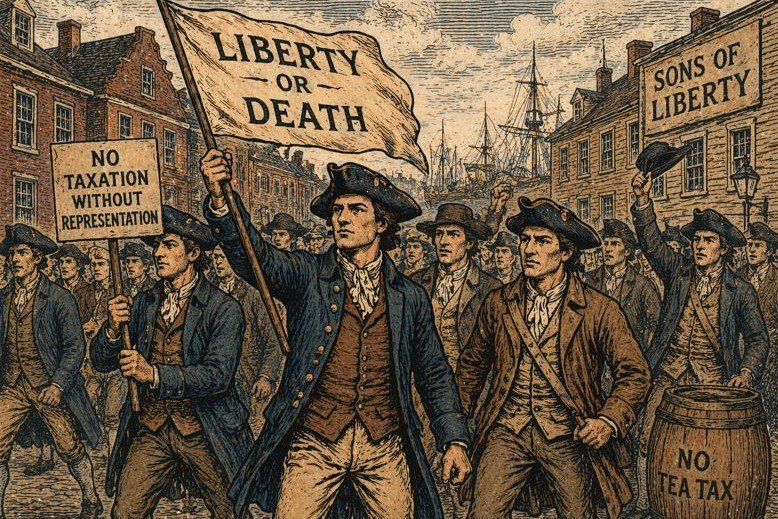
In the years leading up to 1770, tensions between Britain and its American colonies had already been escalating. Policies such as the Stamp Act and the Townshend Acts had provoked widespread opposition, rooted in the belief that Parliament had no right to tax the colonies without their consent. Yet for many colonists, these disputes were still framed within a broader loyalty to the British Crown. The goal, at least initially, was reform rather than independence.
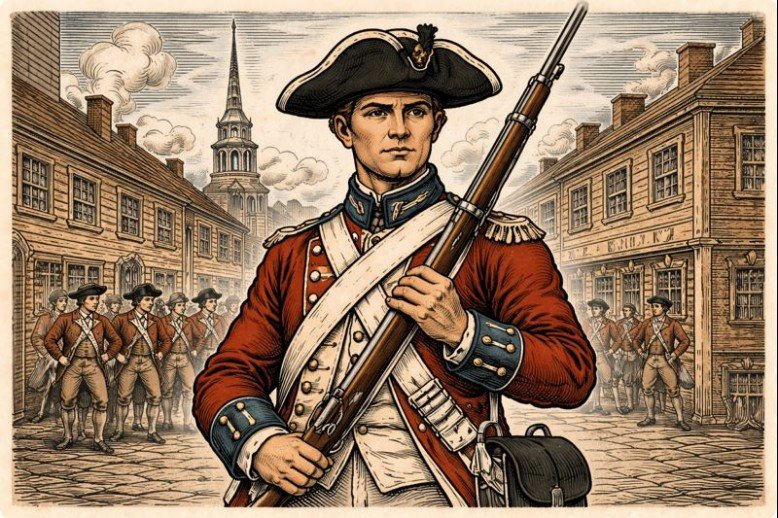
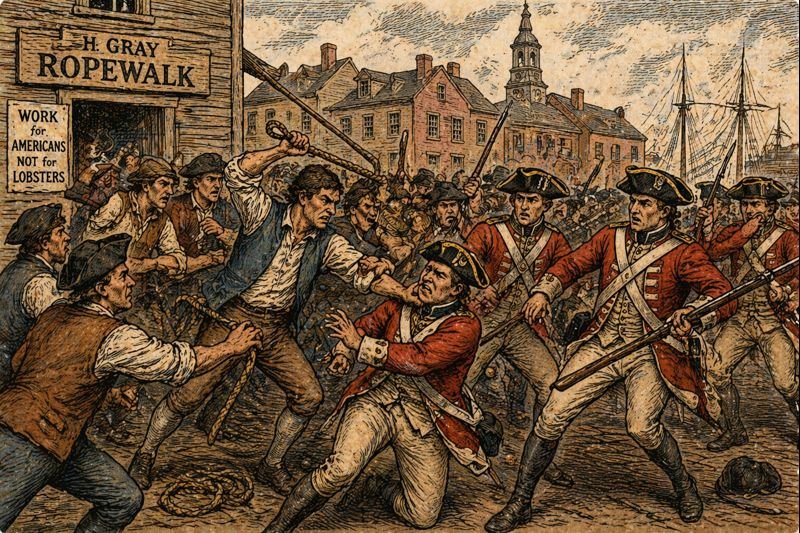
The presence of British troops in Boston, beginning in 1768, altered this dynamic significantly. Soldiers were not simply enforcing laws; they were visible, daily reminders of imperial authority. Their interactions with civilians, marked by suspicion, resentment, and frequent confrontation, created an atmosphere in which violence became increasingly likely. By early 1770, incidents such as the ropewalk fights had already demonstrated how fragile the situation had become.
When shots were fired on March 5, 1770, killing five colonists, the event quickly took on symbolic meaning. What might have remained a localized tragedy was transformed into a powerful political narrative. Patriot leaders seized upon the incident as evidence of British tyranny, portraying it as an unprovoked attack on innocent civilians. Through speeches, pamphlets, and visual imagery, most famously the engraving by Paul Revere, the massacre was presented as a deliberate act of oppression.
This process of interpretation was crucial. The Boston Massacre became more than an event; it became a story that could be told and retold, shaping how colonists understood their relationship with Britain. It reinforced the idea that British rule was not merely misguided but dangerous. The presence of a standing army, once justified as a means of maintaining order, was now seen as a threat to the lives and liberties of ordinary people.
At the same time, the colonial response to the massacre revealed an important tension. Despite widespread anger, the soldiers involved were given a fair trial, defended by John Adams, and most were acquitted. This demonstrated a commitment to legal principles and helped the patriot cause maintain a moral high ground. However, it also underscored the limits of existing political structures. Justice could be done in a courtroom, but the broader conflict between imperial authority and colonial rights remained unresolved.
In the short term, tensions eased somewhat after the massacre. Parliament repealed most of the Townshend duties in 1770, and for a brief period, open conflict appeared to recede. Yet the underlying issues persisted. The memory of the massacre continued to shape colonial attitudes, kept alive through annual commemorations and political rhetoric. It served as a reminder of what could happen when disputes escalated and as a warning about the consequences of unchecked power.
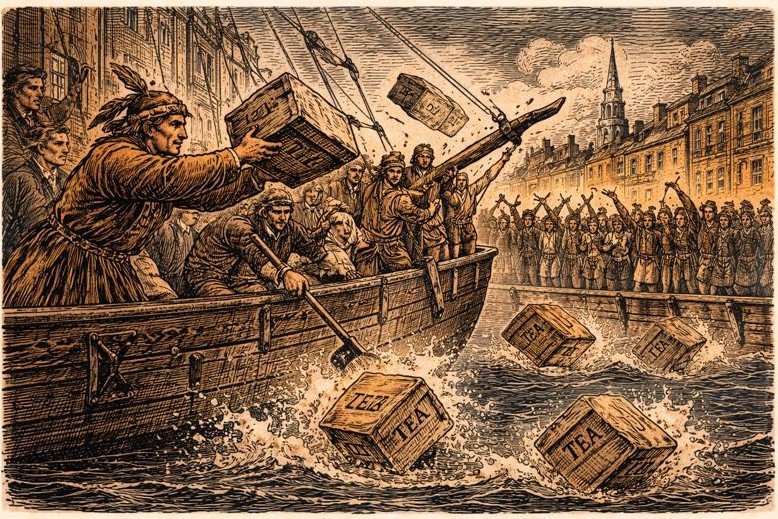
Over the next few years, new crises reignited the conflict. The Tea Act of 1773 and the subsequent Coercive Acts intensified colonial resistance, particularly in Massachusetts. Events such as the Boston Tea Party demonstrated a growing willingness to challenge British authority directly. In response, Britain’s efforts to assert control became more forceful, further alienating the colonies.
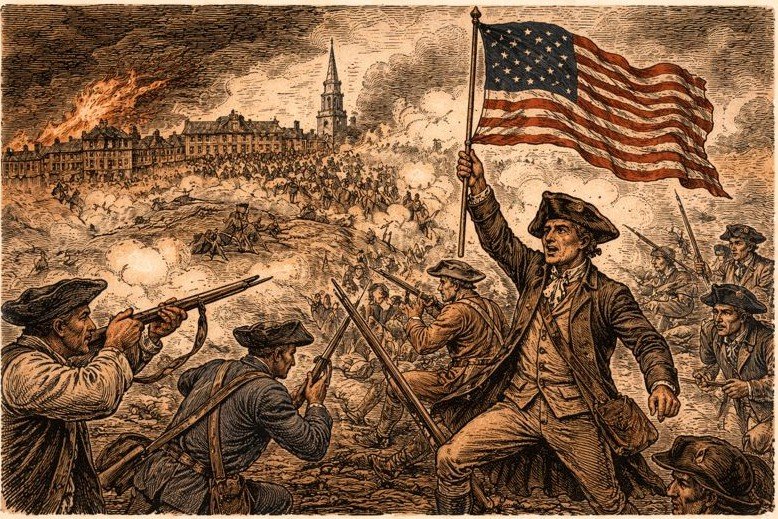
By 1774 and 1775, the situation had reached a tipping point. Colonial leaders (such as Paul Revere) began to coordinate their response through the Continental Congress, and militias prepared for the possibility of armed conflict. The outbreak of fighting at Battles of Lexington and Concord marked the transition from resistance to revolution.
In this broader trajectory, the Boston Massacre occupies a pivotal place. It did not start the war, but it helped to make war conceivable. It provided a powerful example of the dangers colonists believed they faced and a rallying point for those advocating resistance. By turning a chaotic street confrontation into a symbol of oppression, patriot leaders were able to unify diverse grievances into a shared narrative.
Perhaps most importantly, the massacre contributed to a shift in perception. Before 1770, many colonists still saw themselves as British subjects seeking redress within the empire. Afterward, increasing numbers began to question whether their rights could be secured under British rule at all. This shift was gradual and uneven, but it was essential to the eventual move toward independence.
In this way, the Boston Massacre can be seen as an early turning point in the road to revolution. It crystallized existing tensions, amplified colonial grievances, and helped to reshape the political imagination of the colonies. By the time war broke out in 1775, the ideas and emotions that the massacre had helped to generate were firmly embedded, making the conflict not just possible, but, for many, inevitable.